Stewards of Denendeh
Dene means simply “the people.” Dene Nation represents the Indigenous peoples of Denendeh, our homeland in the western Northwest Territories — the Gwich’in, Sahtú, Deh Cho, Tłı̨chǫ, and Akaitcho Dene — bound together by common languages, a shared worldview, and a history of resisting outside control long before this organization existed to formalize it. We are not one office in Yellowknife. We are the communities themselves, choosing to stand together.
Who We Are
Dene Nation brings together five distinct regional groups, each with its own language and territory within Denendeh. The Gwich’in Dene live along the Mackenzie River delta, related to Gwich’in communities across the Yukon and Alaska. The Sahtú Dene are centred north and west of Great Bear Lake. The Deh Cho Dene live along the Mackenzie, Liard, Nahanni, and Keele rivers. The Tłı̨chǫ Dene occupy the land between Great Bear and Great Slave Lakes. And the Treaty 8 Dene — including the Yellowknives Dene and the Denesųłiné — are signatories from south, east, and north of Great Slave Lake. Together, these nations chose to organize under one name so they could speak to the world with one voice, without losing what makes each of them distinct.
Denendeh
There is no word in the Dene languages for “wilderness” — wherever we go is home. Our Elders teach that the earth was left to us by our ancestors to care for as we would a living person, for the sake of generations not yet born. This isn’t an abstraction; it shapes how Dene relate to hunting, fishing, and the land itself, and it’s the foundation the Dene Nation was built to protect.
Our History
Dene signed Treaty 8 in 1900 and Treaty 11 in 1921–22, understanding them as peace and friendship agreements between nations — not as a surrender of land or rights. For decades, promises made in those Treaties went unfulfilled. In 1969, when the federal government’s White Paper proposed dissolving the Indian Act and transferring responsibility for Indigenous peoples to the provinces and territories, 16 Dene Chiefs meeting in Fort Smith moved quickly to organize in response, forming the Indian Brotherhood of the Northwest Territories under founding interim President Mona Fox. In July 1975, more than 300 delegates at a Joint Assembly in Fort Simpson unanimously adopted the Dene Declaration, asserting that the Dene are a distinct nation within Canada with the right to self-determination. Shortly after, the organization formally took the name Dene Nation — a name that opened membership to all who identified as Dene, not only those defined as “Indian” by the federal government.
Self Determination
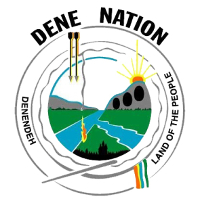
Dene history has survived for tens of thousands of years through oral tradition — stories like that of Yamoria, the Dene holy man who set the laws still followed today, whose journey along the Sahtú and Dehcho left marks still visible on Bear Rock Mountain. That same story inspired the Dene Nation’s own logo, designed by Chief Gerry Antoine. It’s a reminder that this organization was never separate from Dene culture — it grew out of it, led over the decades by figures like Georges Erasmus, Stephen Kakfwi, and Bill Erasmus. Today, Dene Nation continues the work its founders began: building the capacity of Dene communities to govern themselves, on their own terms, as they always have.